Rodent Control for Mice and Rats in Kaysville, UT
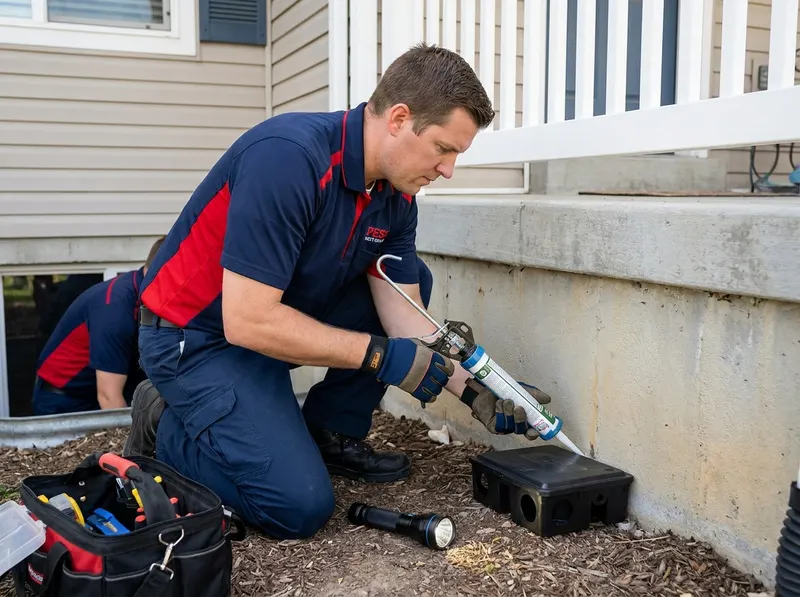
- Included: a full interior and exterior rodent inspection, identification of the species (house mouse, deer mouse, or rat), trap placement in active areas, tamper-resistant exterior bait stations where appropriate, and a written list of the entry gaps found.
- Speed: most Kaysville rodent calls are scheduled within a few business days, and heavy indoor mouse activity is prioritized; trapping typically resolves over 2–3 visits about a week apart.
- Cost: rodent work in Kaysville starts at $500 and commonly lands between $500 and $1,500 depending on house size, crawlspace access, and how much sealing is needed — ballpark only, exact price confirmed on a free on-site visit.
- What we remove: trapped mice and rats, accessible droppings and nesting material in the treated areas, and old spent bait or abandoned store-bought traps you'd rather not touch.
- Booking: call or text (385) 206-5679 with your neighborhood and where you've seen droppings; you'll get an arrival window, not a vague all-day promise, and single-visit and no-contract options are available.
Kaysville has two very different rodent situations, and the fix isn't the same for both. Homes on the <strong>Kaysville East Bench</strong> and along the dry-farm and foothill edge get field mice pushing in when night temperatures drop in October and November — they follow the warm air leaking out of a rim joist or a garage door with a worn bottom seal. Properties with acreage, hay, or grain storage, like parts of <strong>Sunset Equestrian Estates</strong> and the pasture pockets near the Fruit Heights border area, feed rodents year-round, so those jobs lean on exterior stations and outbuilding work as much as anything indoors. In <strong>Old Downtown Kaysville</strong> near the Main Street district, and in older stock around Flint Street and the Barnes Park area, the culprit is usually the building itself: stone or block foundations with mortar gaps, coal-chute or crawlspace hatches that never sealed right, and utility penetrations added over decades of remodels. Newer subdivisions like Crestwood, Deseret Estates, and the Snow Horse / Angel Street neighborhood aren't immune — new construction gaps at siding corners, weep holes, and A/C line sets are some of the most reliable mouse doors in Davis County.
Rats are the less common call here, and we'll tell you honestly if what you have is a mouse. When rats do turn up in Kaysville, it's typically near irrigation ditches and canal banks, along the <strong>Webb Lane corridor</strong>, or around chicken coops, compost piles, and dog-food storage. The difference matters: rats are heavier, more cautious, and need larger traps and bigger holes sealed — a quarter-sized gap that stops mice won't stop them. Droppings tell us which one we're dealing with in about thirty seconds, which is why the inspection comes before any product.
Here's the honest decision-fit. A $12 snap trap from the hardware store does kill mice, and if you caught one mouse in a garage in September, that may genuinely be the end of it. Where DIY fails is the second and third mouse — the ones still nesting in the wall void because nobody found the door. Bait alone has the same problem in reverse: it can reduce numbers while the opening stays wide open, so next fall you're calling again. <strong>Exclusion — physically sealing gaps with copper mesh, sealant, hardware cloth, and door sweeps — is what ends the cycle</strong>, and it's the part most quick-spray outfits skip. The trade-off is real: exclusion costs more up front and takes longer than dropping bait stations, and on a big older home with a rubble foundation, sealing everything perfectly isn't always possible. In those cases we seal what's reachable and keep exterior stations as the maintenance layer, and we say so plainly instead of promising a permanent fix we can't deliver.
Safety comes up on nearly every call, especially from parents and pet owners. Interior work leans on mechanical traps placed in areas kids and dogs can't reach — under sinks, behind appliances, in crawlspaces — rather than loose bait on the floor. Any exterior rodenticide goes in locked, tamper-resistant stations anchored against the foundation, kept away from vegetable beds and play areas, and we'll walk the yard with you first so you know exactly where each one sits. If you'd rather we use no rodenticide at all, that's a normal request and we'll build the program around trapping and sealing instead.
Call (385) 206-5679Rodent Control for Mice and Rats pricing in Kaysville
| Rodent inspection with initial trapping setup (minimum service) | $500 |
| Mouse program — inspection, trapping, and 2–3 follow-up visits | $500 – $900 |
| Rat program — larger traps, exterior stations, follow-ups | $750 – $1,500 |
| Entry-point sealing / exclusion, targeted areas (garage corners, utility penetrations, door sweeps) | $500 – $1,100 |
| Whole-home exclusion on older Kaysville foundations or crawlspace-heavy homes | $1,200 – $2,800 |
| Acreage or outbuilding rodent work (barns, coops, hay and feed storage) | $650 – $1,800 |
| Droppings and nesting material cleanout in accessible treated areas | $500–$600 |
Exact price confirmed free on-site before any work.
Rodent Control for Mice and Rats — questions, answered
How much does mouse and rat control cost in Kaysville?
Rodent control in Kaysville starts at $500, with most complete jobs falling between $500 and $1,500 depending on house size, crawlspace access, and how much sealing the home needs. Whole-home exclusion on an older foundation runs higher. Every number is a ballpark until we've walked the property — the exact price is confirmed in writing during a free on-site visit.
Do I have to sign a yearly contract for rodent service in Kaysville?
No. Single-visit and short-program rodent work is available in Kaysville with no annual auto-bill contract. Most mouse jobs are a setup visit plus two or three follow-ups until trapping goes quiet and the entry points are sealed. Some acreage properties near Sunset Equestrian Estates or the fields at the Fruit Heights border choose ongoing exterior station service because the food source never goes away, but that's a choice, not a requirement.
When do mice usually get into Kaysville homes?
Mice move indoors in Kaysville most heavily from late September through November, when night temperatures drop and field rodents follow warm air leaking from foundations, garage doors, and rim joists. Homes along the Kaysville East Bench and near open ground see it first. Indoor activity can continue all winter once a population is established inside a wall void, so a January call is just as common as an October one.
Is rodent treatment safe around kids, pets, and garden beds in Kaysville?
Yes, when it's placed with that in mind, and that's how we set up every Kaysville home. Interior work relies on mechanical traps in locations children and pets can't access. Any exterior rodenticide goes into locked, tamper-resistant stations anchored to the foundation and kept away from vegetable beds, sandboxes, and play areas. We'll show you each placement before we leave, and rodenticide-free trapping programs are available on request.
Are there actually rats in Kaysville, or is it always mice?
Mice are far more common in Kaysville, but rats do show up — usually near irrigation ditches, canal banks, the Webb Lane corridor, and properties with chicken coops, compost, or open pet food. Droppings identify the species quickly: rat droppings are noticeably larger and blunter than mouse droppings. We'll tell you honestly which one you have, because rats need bigger traps and larger gaps sealed than mice do.