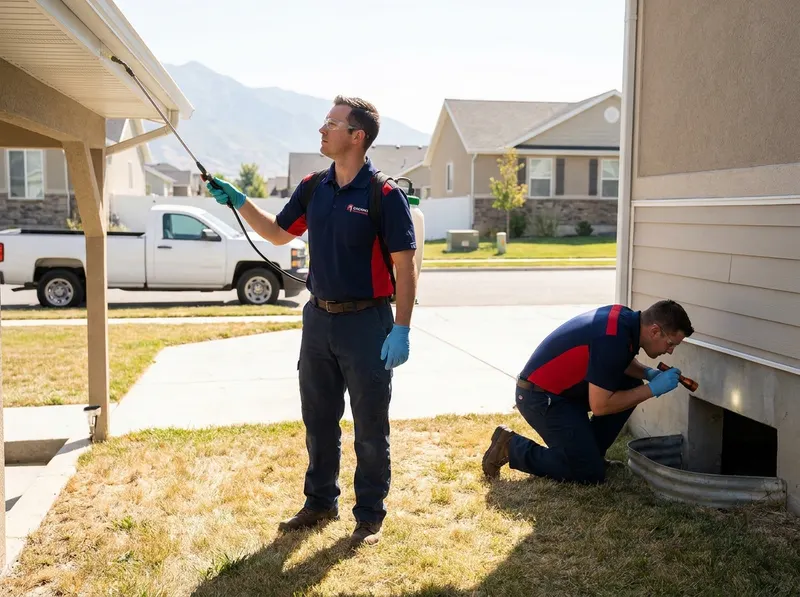
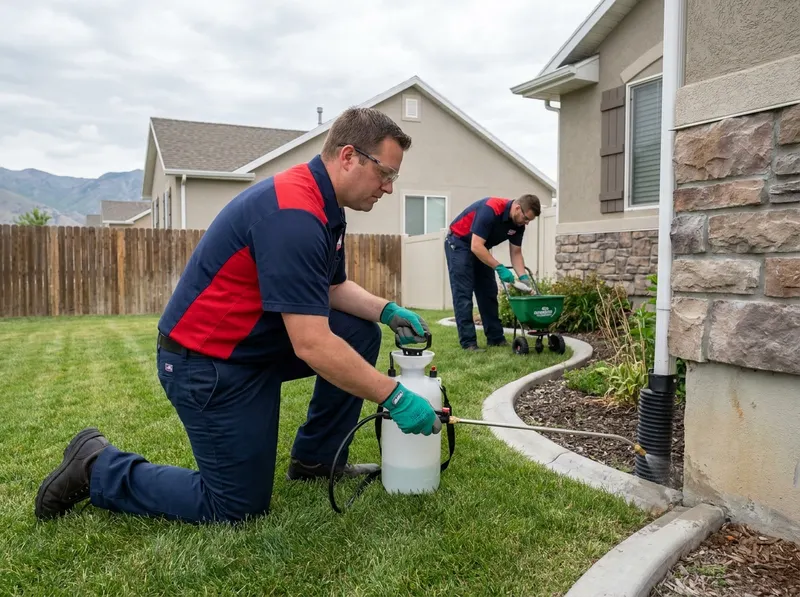
We find the door they're using
Pest Control Service Kaysville homeowners call is usually the one that shows up the same week, finds the actual entry point, and explains what it found in plain English. The work here covers ant trails on kitchen counters, wasp nests over front doors, spiders in unfinished basements, box elder bugs stacked on sunny west walls, and mice moving in off the east bench when the nights turn cold. Every job starts with an inspection, not a sprayer — because <strong>spraying a baseboard does nothing if the door they're using is a half-inch gap behind the dryer vent</strong>.
Call (385) 206-5679
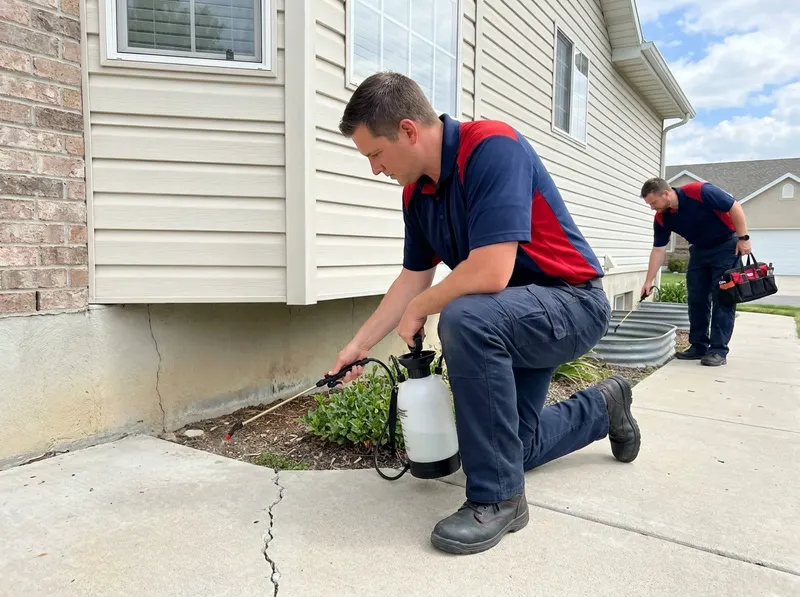
Text or call about your pest control service job — a quick photo helps us quote fast.
A firm, all-in price confirmed before we start — no surprises.
On time, done to standard, and tidy when we leave.

Ant control in Kaysville targets the colony, not the trail. Odorous house ants, pavement ants, and field ants push indoors from March through May as soil warms on the bench, following moisture into kitchens and under dishwashers. Treatment combines non-repellent products and baits so foragers carry the material back to the nest, plus a treated perimeter band at the foundation where trails cross. Colony targeting matters when the ants keep reappearing in a new spot after a hardware-store spray — that is a scattered colony, not a new one. Single-visit interior and exterior ant service typically runs $500 to $700.

Spider control in Kaysville focuses on web removal, harborage, and the insects spiders are eating. Hobo spiders, wolf spiders, and black widows are the common finds here — widows in window wells, garage corners, and under deck framing along the Kaysville East Bench. Service includes knocking down webs and egg sacs under eaves and around window frames, then treating cracks, sill plates, and stacked-material areas near the foundation. Web removal matters because spiders rebuild in the same anchor points, and clearing them tells you within two weeks whether activity has actually dropped. Most spider treatments start at the $500 on-site minimum.

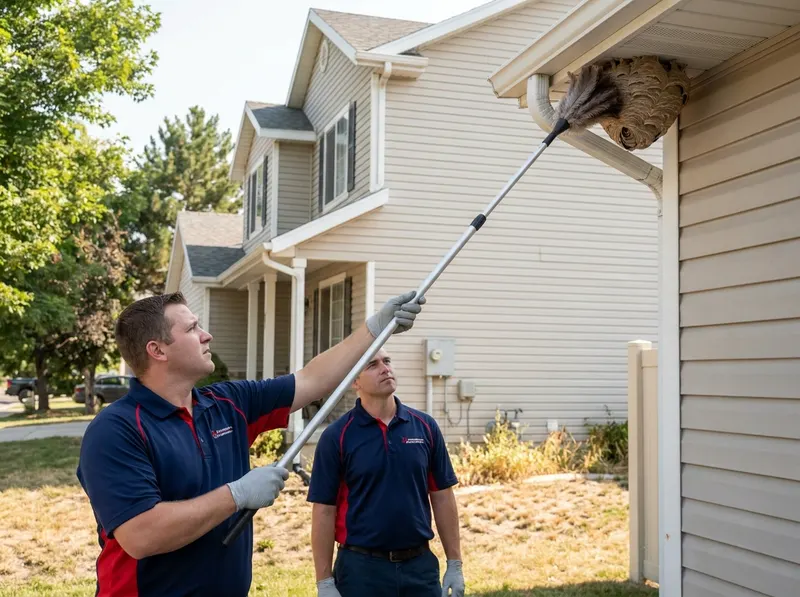
Wasp and hornet nest removal in Kaysville handles paper wasps under soffits, yellow jackets in ground nests and wall voids, and bald-faced hornet nests in trees and eaves. Calls peak from June through August, and July scheduling gets tight fast — same-day or next-day service is the goal on nests near a front door, playset, or garden gate. Accessible eave nests generally run $500 to $750; multiple nests, high rooflines, or a colony inside a wall void run $650 to $1,100 because void work requires drilling access and treating where the workers travel. Void treatment matters when you see wasps entering a siding seam rather than a visible nest.

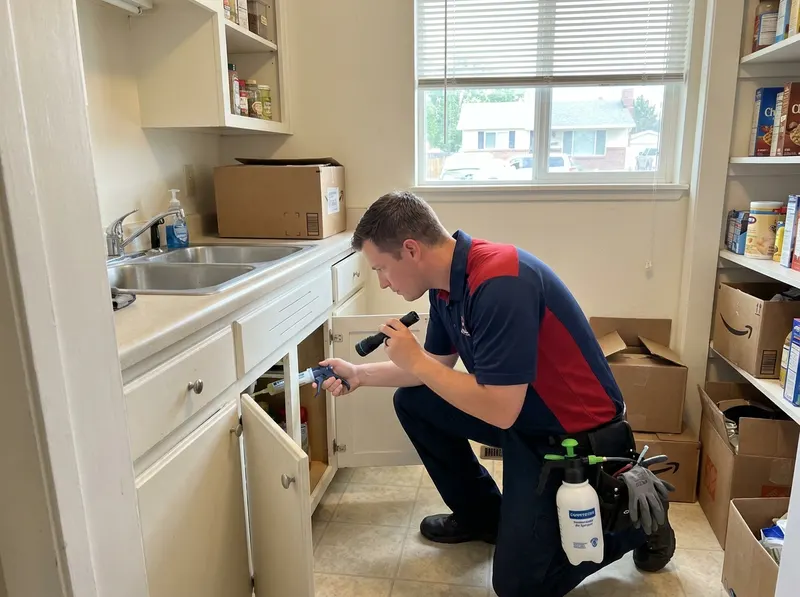
Rodent control in Kaysville addresses house mice, deer mice, and occasional roof rat activity with an inspection-led trap and bait program placed where droppings, rub marks, and gnawing actually appear — under sinks, behind ranges, in garage corners, along crawlspace joists. Interior rodent work is the main demand from November through February, and appointment availability is generally faster in those months. Programs run $500 to $900 depending on house size and number of set locations, and include a written note of every gap found. Documented gaps matter because they turn an annual mouse problem into a one-time repair list.

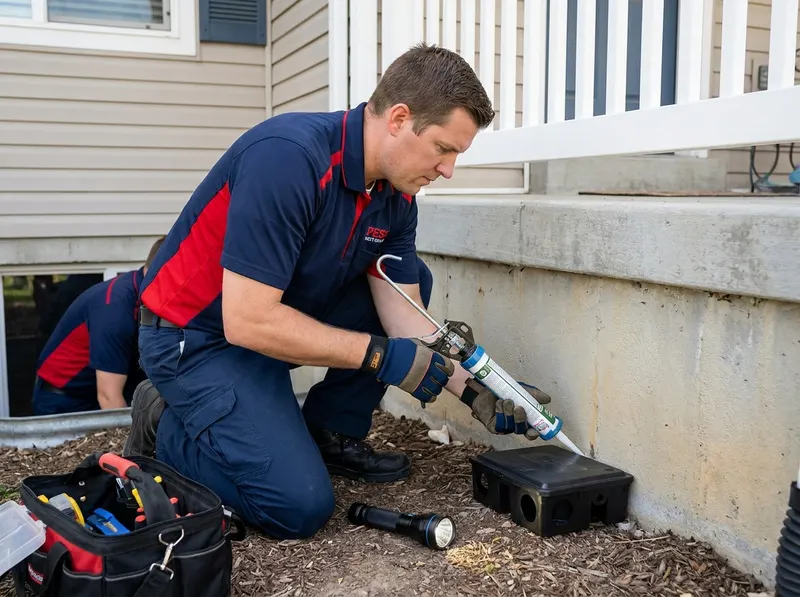
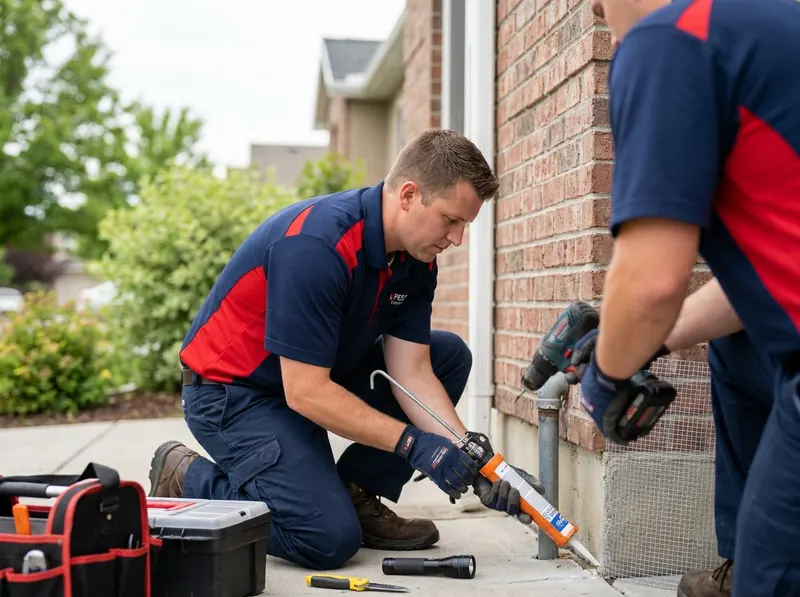
Rodent exclusion in Kaysville is the physical repair side of the work: sealing weep holes, garage door corners, dryer and range vents, hose bib and utility penetrations, crawlspace vents, and rim joist gaps with hardware cloth, copper mesh, and sealant. A mouse fits through an opening about a quarter-inch wide, which is why trapping alone never ends the cycle. Exclusion runs $700 to $2,400 depending on how many openings a home has and whether crawlspace or attic access is involved. Exclusion matters most on the Kaysville East Bench and in the Sunset Equestrian Estates area, where homes sit closest to dry foothill slope and open pasture.

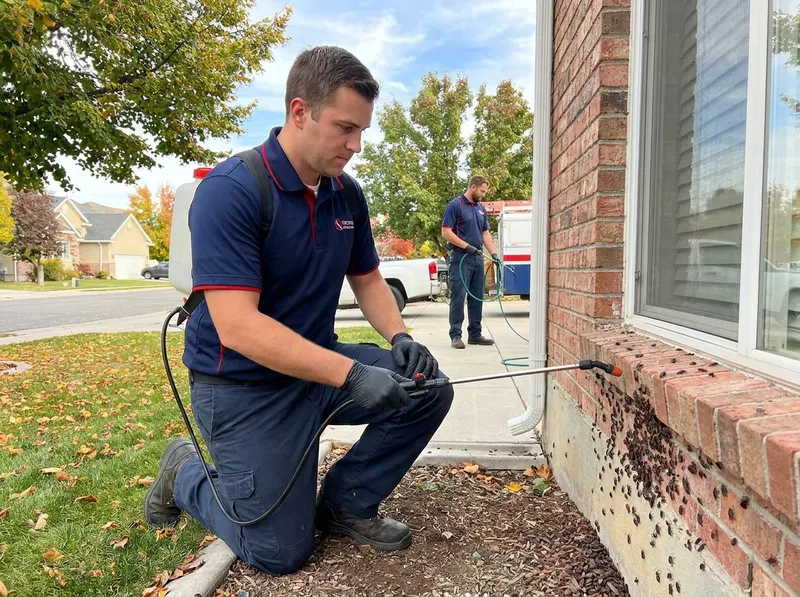
Box elder bug treatment in Kaysville targets the swarms that stack on sunny south and west walls from late August through October, then push into window frames and attic vents looking for a place to overwinter. Boxelder and maple trees around older neighborhoods near Kaysville Cemetery and Heritage Park feed local populations year after year. Service treats siding, window and door frames, foundation bands, and tree bases where nymphs congregate, and works best applied in early September before the walls are already covered. Timing matters here more than product — a treatment applied after the bugs are inside is a cleanup, not a prevention. Exterior box elder bug service runs $500 to $800.

Cockroach treatment in Kaysville covers German cockroaches in kitchens and bathrooms plus the larger Oriental and American roaches that come up from floor drains, crawlspaces, and utility lines. German roach work is a multi-visit job — gel bait in hinges, void injections, and monitors, with a follow-up two to three weeks out to catch the generation that hatched after the first service. Monitoring matters because it shows whether the population is dropping or just moving. Roach programs run $600 to $1,500 depending on unit count and severity, and kitchen prep instructions are provided before the first visit so the bait competes with less food.

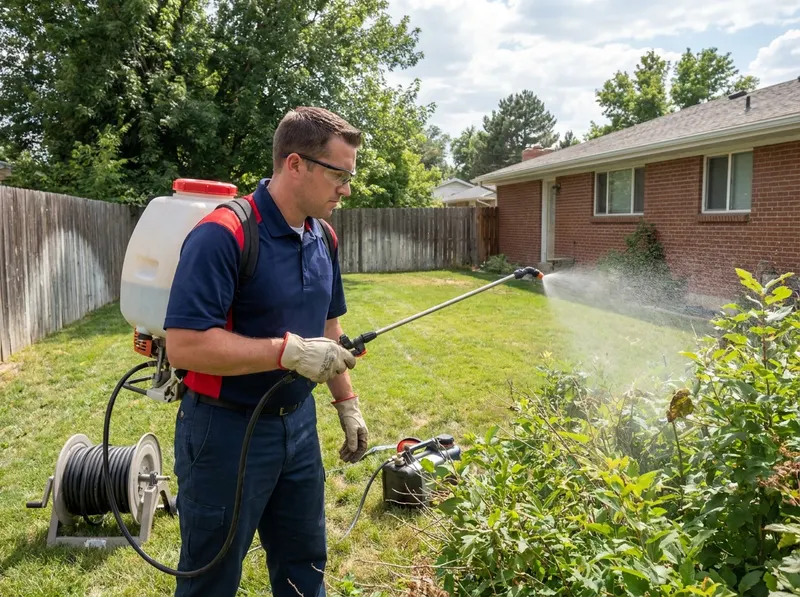
Mosquito control in Kaysville treats resting harborage — shaded shrub beds, fence lines, deck undersides, dense ground cover — and addresses standing water sources on the property. Pressure runs highest from June through August on lots near irrigated pasture, canal lines, and flood-irrigated yards along the Webb Lane corridor and Flint Street area. Per-application yard service runs $500 to $800, and a multi-application season program is priced on lot size after a walk-through. Harborage treatment matters when your yard is fine at noon and unusable at 7 p.m. — that is a resting-site problem, not a breeding-site problem.

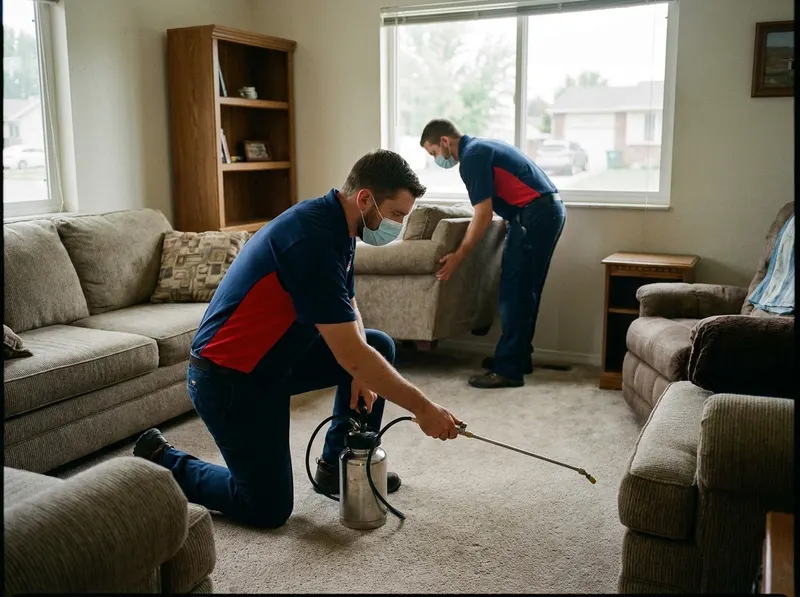
Flea treatment in Kaysville handles interior infestations in carpet, pet bedding, upholstery seams, and along baseboards, with yard harborage treated where pets spend time outdoors. Fleas are common after a summer of dogs running open ground near Barnes Park and Nicholls Park, and after new pets or wildlife under a deck. Interior flea service runs $550 to $1,100 and requires vacuuming and laundering before and after application — a follow-up is usually needed because pupae in the carpet are protected from the first treatment. Coordinating with your veterinarian's on-pet product matters, since treating the house without treating the animal restarts the cycle.

Earwig treatment in Kaysville covers the earwigs, crickets, millipedes, silverfish, and pillbugs that move from mulch beds and irrigated lawns into garages, window wells, and basements during June through August. These are moisture pests, so service pairs a treated perimeter band with recommendations on mulch depth, grade, downspout discharge, and where sprinkler spray is soaking a foundation wall. Moisture correction matters because a treated perimeter over saturated soil is a short-lived fix. Occasional invader service starts at the $500 on-site minimum and is often combined with an ant or spider visit at no additional trip charge.
The real decision in Kaysville is not which chemical — it is how much of the problem you want solved on the first visit. If you have one visible problem and want it gone, choose a single one-time treatment: a wasp nest over the porch, an ant trail in the kitchen, a spider problem in a finished basement. That runs from the $500 on-site minimum up to about $750 depending on access and square footage, and it is the right call when the pest is seasonal and the house is otherwise tight. If pests keep coming back every spring and every fall no matter what you spray, choose a recurring exterior program — typically four visits a year timed to the local pest calendar rather than a random billing date. The trade-off is straightforward: one-time service costs less today but treats a symptom, while recurring service costs more across the year and keeps the perimeter treated before ants and box elder bugs ever reach the door. If your problem is mice, the decision changes again. Trapping and baiting alone will lower the population in a week or two, but the mice come back, because a mouse needs a gap the width of a pencil. If you want the population down fast, choose rodent control. If you want it to stop being an annual event, choose rodent control plus exclusion — sealing weep holes, garage door corners, utility penetrations, crawlspace vents, and rim joist gaps. The trade-off is cost and time: exclusion is hand labor and runs $700 to $2,400 depending on how many openings the house has, while trapping alone starts at the $500 minimum. Older homes near Old Downtown Kaysville and the Main Street district tend to need more sealing work than newer builds in Crestwood or Deseret Estates, simply because stone and block foundations have more openings than a modern poured wall. Question homeowners ask most: can I just handle this with a $12 spray from the hardware store? For a single wasp nest you can reach safely, sometimes yes. For ants, hardware-store sprays usually kill foragers and scatter the colony, which is why the trail reappears four feet to the left a week later. Follow-up question: is this safe around kids, pets, and vegetable beds? Products are selected and placed with that in mind — bait placements in voids and cracks rather than open floors, and garden areas flagged and worked around. Tell the technician where the raised beds, dog runs, and chicken coops are before work starts, and the plan gets built around them. Last one: will a single visit be enough? For wasps, box elder bugs, and most spider calls, usually. For German cockroaches and fleas, plan on a follow-up two to three weeks out, because eggs already laid are not affected by the first application.
| Service call | Upfront quote |
Your exact price is confirmed before any work begins.